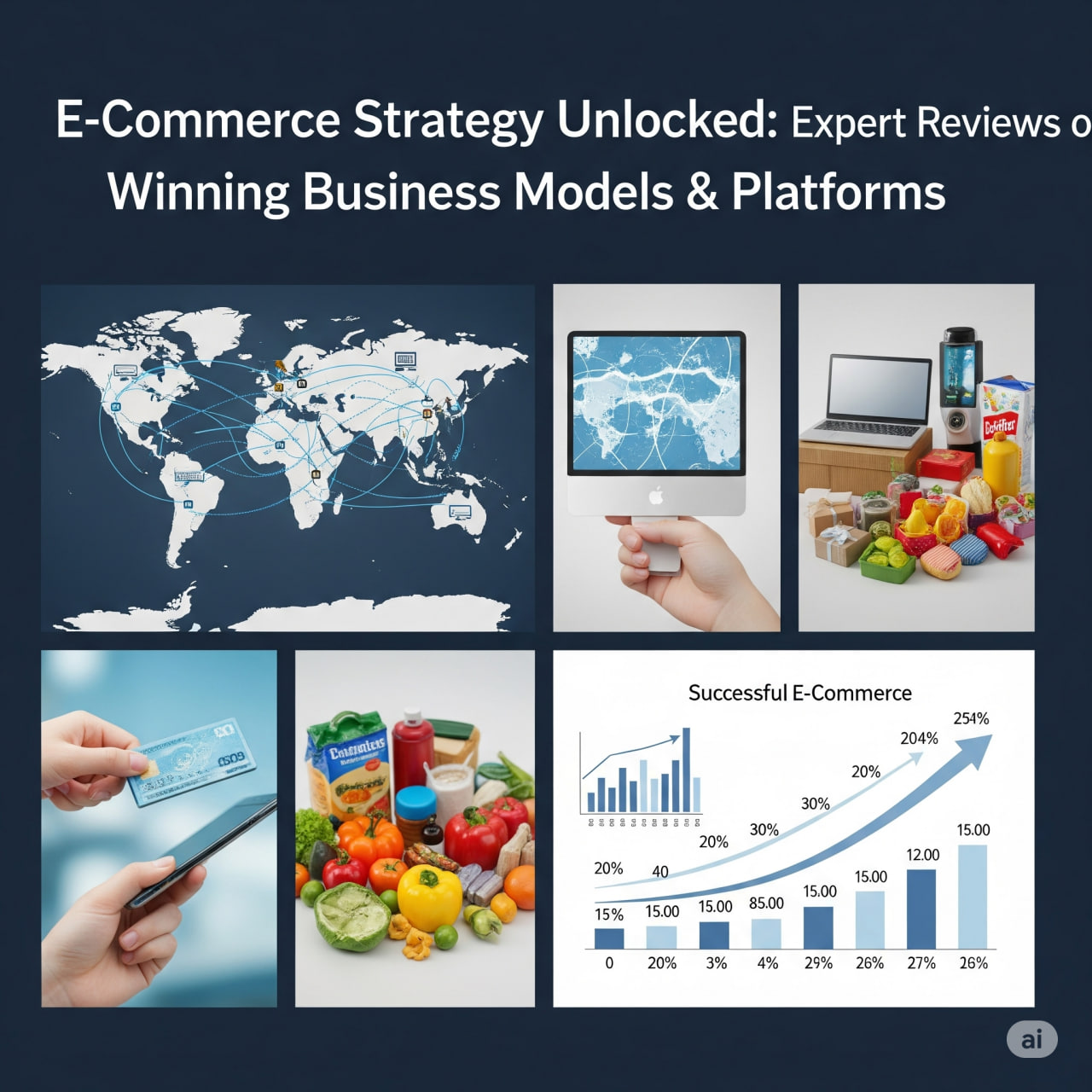
Expert Reviews of Winning Business Models & Platforms” for E-commerce in 2025, I need to perform some targeted research.
Here are the search queries I’ll use:
- What are the most profitable e-commerce business models thriving in 2025?
- Which e-commerce platforms are considered top-tier for scalability and features in 2025?
- Expert reviews of winning e-commerce strategies 2025
- E-commerce business model trends and forecasts 2025
- Best e-commerce platforms for different business models 2025
- Successful e-commerce case studies 2025
- Future of online retail models 2025
E-Commerce Strategy Unlocked: Expert Reviews of Winning Business Models & Platforms (2025)
The e-commerce landscape in 2025 is defined by hyper-personalization, seamless omnichannel experiences, and an undeniable shift towards sustainability and ethical practices. AI is no longer a futuristic concept but an integrated necessity, driving efficiencies and enhancing customer journeys. Here’s an expert review of the winning business models and the platforms empowering them.
I. Winning E-Commerce Business Models in 2025
The most successful e-commerce businesses in 2025 are those that prioritize niche markets, recurring revenue, and value-driven propositions, often leveraging direct-to-consumer (DTC) approaches.
- Subscription Box Model:
- The Verdict: This model continues its strong growth, appealing to consumers seeking convenience, curation, and discovery. From gourmet snacks and beauty products to niche hobby supplies and pet products, subscription boxes offer recurring revenue and foster deep customer loyalty. Personalization, driven by AI, allows for highly tailored boxes, reducing churn.
- Why it’s Winning: Predictable recurring revenue, high customer lifetime value (CLV), strong community-building potential, ability to introduce new products efficiently.
- Key Success Factors: Niche targeting, exceptional curation, engaging unboxing experiences, seamless reordering/management.
- Digital Products & Online Courses:
- The Verdict: With the e-learning industry projected to reach $400 billion by 2026, selling digital products like eBooks, templates, software, and online courses remains incredibly profitable. This model boasts high-profit margins as there are no physical inventory or shipping costs, and products can be scaled infinitely.
- Why it’s Winning: High scalability, low overheads, passive income potential, strong demand for specialized knowledge and tools.
- Key Success Factors: High-quality content, strong personal branding/authority, effective digital marketing (SEO, content marketing, social media).
- Print-on-Demand (POD) & Custom Apparel:
- The Verdict: POD allows entrepreneurs to sell custom-designed products (t-shirts, mugs, phone cases, art prints) without managing inventory or fulfillment. This model has low startup costs and reduced risk, making it attractive for creators and niche markets.
- Why it’s Winning: Minimal upfront investment, no inventory risk, high customization for niche appeal, easy to test designs.
- Key Success Factors: Unique and appealing designs, strong brand identity, effective social media marketing, reliable POD fulfillment partners.
- Niche Dropshipping (Ethical & Sustainable Focus):
- The Verdict: While dropshipping has faced scrutiny, its evolution in 2025 focuses on niche markets and ethical sourcing. Successful dropshippers are moving away from generic, low-quality products to curate high-quality, often sustainable or eco-friendly goods. Transparency about sourcing and shipping times is crucial.
- Why it’s Winning: Low startup costs, no inventory management, ability to test product ideas quickly. The “winning” aspect in 2025 comes from a focus on value and transparency over just price.
- Key Success Factors: Meticulous supplier vetting, clear communication on shipping, strong customer service, targeting specific, underserved niches.
- Sustainable & Eco-Friendly Products:
- The Verdict: Consumer demand for sustainable and ethically produced goods is skyrocketing. Businesses focusing on eco-friendly versions of popular products, organic and natural items, or promoting a circular economy (resale, repair, upcycling) are gaining significant market share and customer loyalty.
- Why it’s Winning: Strong consumer demand driven by environmental consciousness, higher customer loyalty, positive brand image.
- Key Success Factors: Genuine commitment to sustainability (avoiding “greenwashing”), transparent sourcing and production, effective communication of environmental impact.
II. Expert Reviews of Winning E-Commerce Platforms in 2025
Choosing the right platform is critical for scalability, user experience, and managing your chosen business model. AI integration, mobile-first design, and seamless omnichannel capabilities are hallmarks of top platforms in 2025.
- Shopify (Overall Excellence & Scalability)
- The Verdict: Shopify remains the undisputed leader for businesses of all sizes, from startups to large enterprises. Its user-friendly interface, vast app ecosystem (over 8,000 integrations), robust features, and constant innovation (especially with AI tools for merchants) make it incredibly versatile. Its focus on mobile commerce and integrations for social selling (e.g., TikTok Shop, Instagram Shopping) keep it at the forefront.
- Strengths:
- Ease of Use: Intuitive drag-and-drop editor, quick setup.
- Scalability: Supports rapid growth from small businesses to high-volume merchants.
- App Store: Extensive third-party app marketplace for every business need.
- AI Tools: Increasingly integrated AI for product descriptions, marketing copy, and analytics.
- Omnichannel: Strong POS (Point of Sale) for blending online and offline sales.
- Best for: Most e-commerce businesses, especially DTC brands, dropshippers, and those looking for an all-in-one hosted solution with extensive functionality.
- WooCommerce (Flexibility & WordPress Integration)
- The Verdict: As a free, open-source plugin for WordPress, WooCommerce is the go-to for businesses already using or planning to use WordPress for their website. It offers unparalleled flexibility and customization, making it ideal for those with specific design or functional requirements and the technical expertise (or a developer) to implement them.
- Strengths:
- Customization: Full control over design and functionality via WordPress themes and plugins.
- Cost-Effective: Free core plugin, but costs accumulate with hosting, premium themes, and plugins.
- SEO: Benefits from WordPress’s strong SEO capabilities.
- Community: Large developer and user community for support.
- Best for: WordPress users, businesses needing highly customized solutions, those comfortable with self-hosting and managing their own technical aspects.
- BigCommerce (Enterprise-Grade Features & Scalability)
- The Verdict: BigCommerce is designed for larger, scaling businesses and enterprises. It offers robust built-in features that often require apps on other platforms, such as advanced SEO tools, multi-channel selling, and extensive product variant options. Its sales-volume capped plans make it appealing for high-volume sellers.
- Strengths:
- Built-in Features: Less reliance on third-party apps for core functionality.
- Scalability: Handles large product catalogs and high sales volumes effectively.
- Multi-channel Selling: Strong capabilities for selling across various marketplaces and social channels.
- SEO: Excellent native SEO tools.
- Best for: Growing and established businesses with complex needs, B2B e-commerce, and those focused on multi-channel sales without wanting to heavily rely on numerous apps.
- Wix eCommerce (Ease of Use & Design Focus for SMBs)
- The Verdict: Wix has significantly beefed up its e-commerce capabilities in 2025, moving beyond just a website builder. Its drag-and-drop editor remains incredibly user-friendly, making it an excellent choice for small businesses and entrepreneurs who prioritize beautiful design without coding.
- Strengths:
- User-Friendly: Intuitive drag-and-drop interface.
- Design Flexibility: Wide range of modern templates and customization options.
- All-in-One: Includes website builder, hosting, and e-commerce features.
- Affordability: Flexible pricing plans suitable for startups.
- Best for: Small businesses, artists, creators, and those who prioritize design and ease of use over complex, highly specialized e-commerce features.
- Adobe Commerce (Magento) (Ultimate Customization & Enterprise)
- The Verdict: Adobe Commerce (formerly Magento) remains the powerhouse for large enterprises demanding ultimate control, flexibility, and scalability. It requires significant technical expertise or a dedicated development team but offers unparalleled customization for unique, complex e-commerce operations. Its headless commerce capabilities are a major draw in 2025.
- Strengths:
- Unrivaled Customization: Full control over every aspect of the store.
- Scalability: Handles massive product catalogs and traffic volumes.
- Headless Commerce: Ideal for creating cutting-edge, personalized shopping experiences across multiple touchpoints.
- Robust Security: Enterprise-grade security features.
- Best for: Large enterprises, businesses with unique operational requirements, and those with dedicated development resources for highly customized solutions.
III. Key E-Commerce Strategies for 2025
Beyond choosing the right model and platform, several strategic imperatives define success in 2025:
- Hyper-Personalization with AI:
- Strategy: Leverage AI and machine learning to analyze customer data (Browse history, purchase patterns, demographics) to offer highly personalized product recommendations, discounts, marketing messages, and even dynamic pricing.
- Impact: Increases conversion rates, average order value, and customer loyalty. AI-powered chatbots also provide instant, personalized customer support.
- Omnichannel & Hybrid Shopping Experiences:
- Strategy: Seamlessly integrate online and offline channels. This includes Buy Online, Pick Up in Store (BOPIS), in-store returns for online purchases, and leveraging physical stores as showrooms for online products.
- Impact: Meets evolving consumer expectations for convenience and flexibility, blurring the lines between digital and physical retail.
- Mobile-First Design & Social Commerce:
- Strategy: Ensure your e-commerce site is flawlessly optimized for mobile devices (responsive design, fast loading, intuitive navigation). Actively engage in social commerce (shoppable posts, live stream shopping on platforms like TikTok and Instagram).
- Impact: Captures the vast majority of online traffic and transactions, leverages the power of social media for direct sales and engagement.
- Sustainability & Ethical Branding:
- Strategy: Integrate eco-friendly practices throughout your supply chain, from sourcing and production to packaging and delivery. Communicate your commitment to sustainability and fair practices transparently. Consider offering resale or trade-in programs (circular economy).
- Impact: Builds trust, attracts socially conscious consumers, and creates a strong, differentiating brand identity.
- First-Party Data & Community Building:
- Strategy: Focus on collecting and utilizing first-party customer data to understand preferences deeply. Invest in building brand communities through engaging content, exclusive experiences, and interactive platforms.
- Impact: Reduces reliance on third-party cookies, fosters deeper customer relationships, and drives organic word-of-mouth growth.
- Video Content & Immersive Experiences (AR/VR):
- Strategy: Use video extensively for product demonstrations, tutorials, and storytelling. Explore Augmented Reality (AR) features (e.g., virtual try-ons for clothing, furniture placement in homes) and potentially Virtual Reality (VR) for immersive showrooms.
- Impact: Enhances product discovery, reduces return rates, and creates engaging, memorable shopping experiences.
The e-commerce landscape in 2025 is dynamic and demanding, but also ripe with opportunity. By carefully selecting a winning business model, choosing a scalable platform that aligns with your needs, and adopting these expert strategies, businesses can unlock significant growth and build lasting customer relationships in the digital age.
Leave a Reply